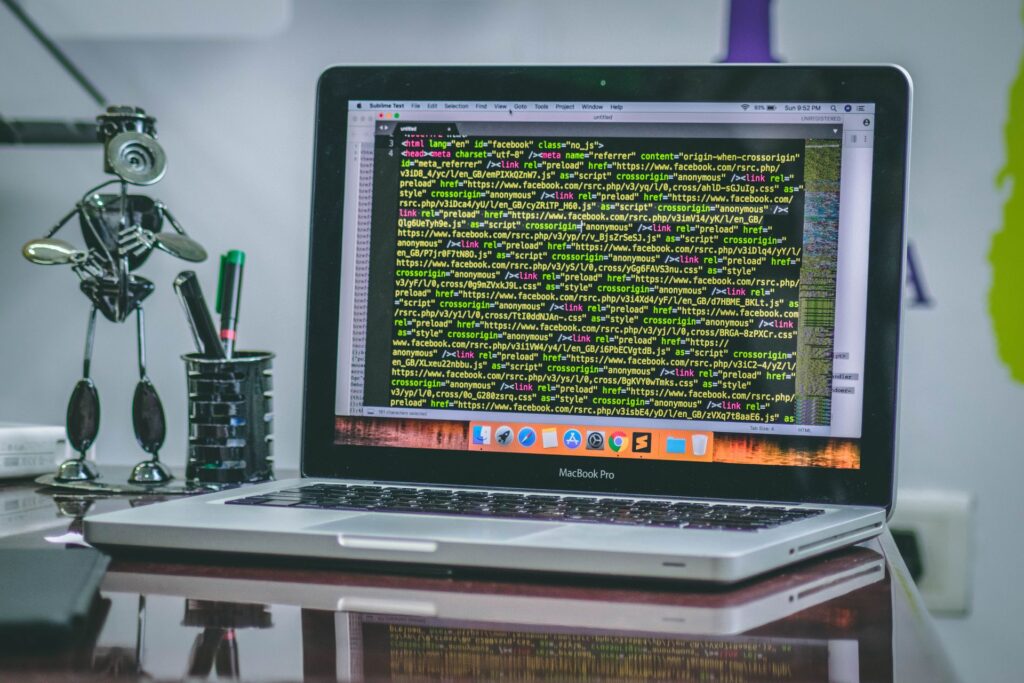
Artificial intelligence is changing how websites are created.
Tasks that once required hours of manual work can now be accelerated with AI. Website layouts can be generated from a prompt, copy can be drafted in seconds, images can be created without a traditional photoshoot, and developers can use AI to help write and troubleshoot code.
This has led to an important question for businesses planning a new website:
Should you use AI website design or traditional web design?
The answer is not as straightforward as choosing one over the other.
AI website design can offer significant advantages in speed, efficiency and automation. Traditional web design provides greater human creativity, strategic thinking and control. Increasingly, however, the strongest approach combines elements of both.
At wda.ai, we see artificial intelligence as a powerful addition to the web design toolkit rather than a replacement for experienced designers and developers.
In this guide, we compare AI website design vs traditional web design, including how each approach works, their advantages and disadvantages, potential costs, SEO implications and which approach could be right for your business.
What is AI website design?
AI website design involves using artificial intelligence to assist with some or all of the website creation process.
Depending on the tools and approach being used, AI can help with:
- Website layouts
- Sitemap planning
- Wireframes
- Website copy
- Images and graphics
- Coding
- SEO recommendations
- Product descriptions
- User experience analysis
- Accessibility checks
- Personalisation
- Customer support
- Website testing
- Business automation
At its simplest, AI website design might involve entering a description of a business into an AI website builder.
For example:
“Create a modern five-page website for an independent accountancy firm working with small businesses.”
The platform could then generate an initial homepage, services page, about page, contact page and supporting content.
At the other end of the spectrum, a professional web design agency might use AI throughout a completely bespoke design and development process.
The important distinction is that AI website design does not necessarily mean the entire website has been created automatically.
There are different levels of AI involvement.
What is traditional web design?
Traditional web design generally involves a website being planned, designed and developed primarily by people using established design and development tools.
A typical project might involve:
Research → Strategy → Sitemap → Wireframes → Design → Development → Content → Testing → Launch
Designers manually develop the visual direction and user experience, while developers transform those designs into a functioning website.
Depending on the project, specialists may also be involved in:
- Copywriting
- SEO
- Photography
- Branding
- Ecommerce
- Analytics
- Conversion optimisation
- Accessibility
- Integrations
Traditional web design therefore tends to involve a greater amount of direct human input at each stage.
This can make the process more time-consuming, but it also provides considerable control over the final result.
AI website design vs traditional web design at a glance
Before exploring each area in detail, here is a simple comparison.
| Area | AI website design | Traditional web design |
|---|---|---|
| Speed | Very fast | Typically slower |
| Initial cost | Can be lower | Usually higher |
| Customisation | Depends on approach | Usually extensive |
| Creativity | AI-assisted | Human-led |
| Strategy | Requires human input | Typically human-led |
| Content creation | Extremely fast | More time-intensive |
| Development | AI-assisted | Primarily manual |
| Unique branding | Can be limited with builders | Strong |
| Complex integrations | Depends on platform | Highly flexible |
| SEO | Requires oversight | Can be strategically planned |
| Scalability | Platform-dependent | Can be designed around growth |
| Maintenance | Potentially automated | Traditionally manual/managed |
| Personalisation | Strong potential | Requires additional development |
| Automation | Strong potential | Requires integrations |
| Quality control | Human review essential | Human-led |
Neither approach automatically produces a better website.
The outcome depends heavily on how the technology is used and who is using it.
1. Speed: AI can dramatically accelerate web design
Speed is one of the clearest advantages of AI website design.
Creating a website traditionally involves numerous manual processes.
A designer might spend hours creating initial concepts. A copywriter could spend days developing website content. Developers may need to manually write or troubleshoot sections of code.
AI can reduce the time required for many of these activities.
A designer can quickly generate ideas.
A developer can use AI to help diagnose an error.
A copywriter can create an initial content structure.
This does not necessarily mean the entire project becomes instantaneous.
Professional websites still require:
- Planning
- Review
- Refinement
- Testing
- Quality control
- Client feedback
But AI can remove some of the repetitive work that previously slowed projects down.
Winner for speed: AI website design
For rapid prototyping and initial creation, AI has a clear advantage.
However, faster does not automatically mean better.
A website created in ten minutes is only useful if it achieves what the business needs it to achieve.
2. Creativity: human designers still have an important advantage
AI can generate impressive designs.
Give an AI system the right instructions and it can produce layouts, graphics, colour combinations and visual concepts almost instantly.
But creativity is about more than generating something visually attractive.
A professional designer considers:
- Brand personality
- Target audience
- Competitors
- Market positioning
- Customer expectations
- User psychology
- Visual hierarchy
- Accessibility
- Commercial objectives
Human designers also understand context.
A luxury property company should not necessarily look like a technology startup. A charity should not communicate in exactly the same way as an ecommerce brand.
AI can generate options.
Human creativity determines which option communicates the right message.
Winner for creativity: Traditional web design
AI is an incredibly useful creative assistant, but human direction remains particularly important when a website needs a distinctive visual identity.
3. Cost: is AI web design cheaper?
One of the biggest attractions of AI website builders is cost.
Some platforms allow businesses to generate a basic website relatively inexpensively compared with hiring an agency.
For a freelancer, startup or small organisation that simply needs a few pages online, this can be appealing.
But website cost needs to be considered alongside website value.
A website costing £100 that generates no business is not necessarily better value than a £5,000 website that consistently generates enquiries.
Businesses should consider:
- How important is the website to generating revenue?
- Does it need bespoke functionality?
- Will customers purchase through it?
- Does it need to integrate with other systems?
- How competitive is the market?
- Does organic search matter?
- Will the website need to scale?
There may also be ongoing costs associated with AI website builders, premium functionality, subscriptions and integrations.
Winner for lowest initial cost: AI website builders
For simple requirements, AI can significantly reduce the cost of getting online.
For businesses relying heavily on their digital presence, however, return on investment is often more important than the lowest possible upfront price.
4. Customisation: traditional design offers greater control
A common limitation of automated website builders is customisation.
AI can generate an impressive starting point, but businesses may eventually encounter restrictions when trying to implement something outside the platform’s normal functionality.
This could include:
- Custom booking processes
- Advanced ecommerce functionality
- Bespoke calculators
- Membership systems
- Customer dashboards
- API integrations
- CRM connections
- Custom databases
- Advanced animations
- Unique customer journeys
Professional development provides considerably greater flexibility.
Rather than adapting the business to fit the website builder, the website can be designed around the business.
Winner for customisation: Traditional web design
However, AI can still play a significant role within bespoke development by helping developers create and test custom functionality faster.
5. Content: AI makes creation much faster
Website content can be one of the most time-consuming parts of a project.
Businesses frequently reach the development stage before discovering that they still need copy for dozens of pages.
AI can accelerate this enormously.
It can help create:
- Page structures
- Initial copy
- Headlines
- FAQs
- Calls to action
- Product descriptions
- Metadata
- Content ideas
But there is a major risk.
AI-generated content can sound like AI-generated content.
If every competitor uses similar prompts and tools, websites can quickly become filled with the same phrases and generic claims.
“Unlock your potential.”
“Elevate your digital presence.”
“Take your business to the next level.”
Professional editing remains important.
The best website content incorporates genuine information about the company, including its expertise, processes, customers, results and personality.
Winner: AI + human collaboration
AI is excellent for accelerating content production.
Humans are essential for making that content accurate, distinctive and genuinely useful.
6. SEO: can AI websites rank on Google?
There is no inherent reason an AI-assisted website cannot perform well in search engines.
The more important question is whether the website follows good SEO principles.
A strong website still needs:
- Logical architecture
- Useful content
- Relevant page titles
- Appropriate headings
- Internal linking
- Fast performance
- Mobile usability
- Crawlability
- Good user experience
- Original information
- Appropriate structured data
AI can help identify keywords, create content structures, generate metadata and analyse pages.
But automatically generating hundreds of pages around keywords does not automatically create a strong SEO strategy.
Search optimisation needs to be connected to real customer intent.
For example, a web design agency does not simply need traffic from anyone interested in websites.
It needs relevant visitors who may actually need web design, development, ecommerce or related services.
Winner: Neither automatically
Both AI-assisted and traditional websites can perform strongly in organic search.
SEO performance depends much more on strategy and execution than the method used to create the website.
7. Branding: templates vs individuality
Your website is often one of the first significant interactions somebody has with your business.
It therefore needs to communicate who you are.
AI website builders can generate polished designs, but there is a risk that generated websites begin to look similar.
The same patterns frequently appear:
Large headline.
Gradient background.
Three feature cards.
Testimonials.
Call-to-action section.
Footer.
There is nothing inherently wrong with these patterns. Many exist because they work.
But businesses that want to differentiate themselves need more than a technically competent layout.
Bespoke web design allows branding to influence every element of the experience, including:
- Typography
- Colours
- Photography
- Illustrations
- Animation
- Spacing
- Tone of voice
- Navigation
- Interaction design
AI can still assist in developing these assets, but the overall creative direction benefits from human oversight.
Winner for distinctive branding: Traditional web design
8. User experience: AI can create, but humans need to understand
User experience, or UX, considers how somebody interacts with a website.
Can they find what they need?
Do they understand the navigation?
Is important information easy to access?
Are forms straightforward?
Is the checkout process intuitive?
Does the website work properly on mobile?
An AI tool can suggest UX improvements based on established patterns.
But businesses often have unique customers and requirements.
A website aimed at experienced engineers may require a completely different experience from one selling children’s clothing.
Professional UX design involves understanding those differences.
This is why AI is particularly powerful when used as an analytical and creative assistant rather than being given complete control.
9. AI allows websites to become more personalised
This is an area where AI website design becomes much more interesting than simply generating layouts.
Traditional websites typically show everyone the same content.
AI creates opportunities for websites to become more adaptive.
For example, an ecommerce website could recommend products based on customer requirements.
A service business could highlight different information depending on what somebody is looking for.
A support website could provide relevant answers based on a customer’s question.
Instead of every visitor following the same rigid journey, the website can potentially respond more intelligently.
Winner for personalisation potential: AI website design
This is likely to become one of the most significant differences between traditional websites and the next generation of digital experiences.
10. AI chatbots can transform customer interaction
Traditional websites rely heavily on navigation and forms.
Visitors find a page, read the information and then submit an enquiry.
AI introduces another interface: conversation.
An AI assistant can potentially answer questions such as:
“Which service is right for my business?”
“Can you integrate with our existing CRM?”
“How quickly could our website be launched?”
“Where do you deliver?”
“Can I change my booking?”
This can make websites considerably easier to navigate, particularly when they contain large amounts of information.
The technology becomes even more powerful when connected with existing business systems.
An AI chatbot could potentially:
- Answer questions
- Recommend services
- Qualify leads
- Collect information
- Search a knowledge base
- Book appointments
- Start support processes
- Trigger automations
That moves the website beyond simply displaying information.
11. Maintenance: AI can reduce repetitive work
Launching a website is only the beginning.
Websites require ongoing management.
This can involve:
- Updating content
- Publishing articles
- Checking broken links
- Monitoring performance
- Reviewing analytics
- Testing forms
- Updating software
- Optimising SEO
AI can assist with many of these processes.
For example, businesses could use automated systems to identify unusual website behaviour, summarise analytics information or flag pages requiring attention.
This does not remove the need for website maintenance.
Instead, it can make maintenance more proactive.
Rather than discovering a problem weeks later, businesses can potentially identify issues much sooner.
12. Integrations and automation: where AI websites become really powerful
The biggest difference between traditional websites and future AI-powered websites may not be visible on the screen at all.
It is what happens behind the scenes.
Consider a traditional website enquiry.
Visitor submits form → business receives email → employee reads email → employee enters information into CRM → employee responds.
Now consider an automated process.
Visitor submits enquiry → AI categorises enquiry → CRM is updated → relevant employee is notified → personalised response is prepared → follow-up task is created.
This can save considerable administrative time.
Websites can connect with platforms such as:
- CRM systems
- Email marketing software
- Booking platforms
- Accounting software
- Ecommerce systems
- Customer support platforms
- Internal databases
AI can help interpret information passing between those systems.
This transforms the website from an isolated marketing channel into part of a wider business automation ecosystem.
13. Security: AI does not remove the fundamentals
AI-generated websites still need to be secure.
Businesses need to consider:
- Software updates
- Secure hosting
- User permissions
- Backups
- Form security
- Data protection
- API security
- Payment security
- Third-party integrations
AI-generated code should also be reviewed carefully.
Code that looks correct may contain vulnerabilities or unexpected behaviour.
The faster code can be generated, the more important professional quality control becomes.
Businesses should therefore avoid assuming that “AI generated” means “automatically secure”.
Advantages of AI website design
AI can provide substantial benefits when used appropriately.
⚡ Faster production
AI can accelerate research, design, development and content creation.
🧠 Intelligent functionality
Websites can understand questions, analyse information and provide more relevant experiences.
⚙️ Greater automation
Repetitive processes can be connected and automated.
📊 Better use of data
AI can help businesses analyse website behaviour and identify useful patterns.
🎯 Personalisation
Different visitors can potentially receive more relevant content and recommendations.
💬 Improved customer interaction
AI assistants can provide immediate support and guidance.
💡 Faster experimentation
Designers and marketers can create and test ideas more quickly.
Disadvantages of AI website design
AI also has limitations.
Generic results
Poor prompts and excessive automation can create websites that look and sound similar.
Lack of business context
AI does not automatically understand the nuances of a company, its customers or its market.
Accuracy problems
AI-generated information and code require verification.
Platform restrictions
Some AI website builders limit custom development and integrations.
Over-automation
Not every customer interaction should be automated.
Privacy considerations
AI systems need to be implemented with appropriate consideration for customer data and privacy.
The solution is not avoiding AI.
It is using AI appropriately and maintaining professional oversight.
Advantages of traditional web design
Traditional web design continues to offer major benefits.
Bespoke creative direction
Designs can be developed specifically around a company’s brand.
Human understanding
Designers can understand subtle requirements, feedback and business context.
Greater flexibility
Developers can create functionality beyond the restrictions of website builders.
Strategic thinking
Website decisions can be aligned with wider commercial goals.
Quality control
Every element can be reviewed and refined throughout the project.
Disadvantages of traditional web design
There are also limitations.
Longer development time
Manual processes generally take longer.
Higher initial investment
Bespoke professional projects usually cost more than automated website builders.
Repetitive processes
Without AI or automation, professionals can spend unnecessary time on routine tasks.
Slower experimentation
Producing multiple concepts manually can require considerably more time.
This is precisely why combining traditional expertise with AI can be so effective.
AI website design vs traditional web design: which is better?
There is no universal winner.
The best option depends on what the website needs to achieve.
Choose an AI website builder if:
You need a relatively simple website, have a limited budget and are comfortable managing much of the process yourself.
This could suit:
- Personal projects
- Early-stage startups
- Freelancers
- Temporary websites
- Simple brochure websites
Choose traditional bespoke web design if:
Your website plays an important role in your organisation and requires significant strategy, branding or custom development.
This could suit:
- Established businesses
- Ecommerce companies
- Professional services
- Growing organisations
- Complex membership websites
- Businesses requiring bespoke integrations
Choose AI-powered professional web design if:
You want the efficiency and capabilities of AI without sacrificing professional strategy and creativity.
For many businesses, this hybrid approach is likely to offer the strongest balance.
The third option: AI-powered professional web design
The AI vs traditional web design debate often creates a false choice.
Businesses do not necessarily have to choose between:
AI builds everything
or
Humans build everything manually.
There is a third option.
Human-led, AI-powered web design.
A professional team can use AI to accelerate appropriate parts of the process while retaining human control over the areas where expertise matters.
For example:
| Project stage | Human expertise | AI assistance |
|---|---|---|
| Strategy | Business goals and positioning | Research assistance |
| Sitemap | User journey planning | Content analysis |
| Design | Creative direction | Concept exploration |
| Content | Brand voice and expertise | Drafting and research |
| Development | Architecture and quality control | Coding assistance |
| SEO | Search strategy | Data and content analysis |
| Testing | Real-world judgement | Automated checks |
| Automation | Workflow strategy | Intelligent processing |
| Optimisation | Commercial decisions | Pattern identification |
This model combines the strengths of both approaches.
AI provides speed, scale and intelligence.
People provide creativity, judgement and strategy.
What does this mean for businesses in 2026 and 2027?
The barrier to creating a basic website is becoming lower.
That is good news.
But it also means simply having an attractive website is becoming less of a competitive advantage.
If almost any organisation can generate a polished website quickly, businesses need to differentiate themselves in other ways.
That means focusing on:
- Better user experiences
- Stronger branding
- Original content
- Faster websites
- Useful functionality
- Intelligent automation
- Better integrations
- Excellent customer journeys
- Genuine expertise
The question is shifting from:
“Can we build a website?”
to:
“What can our website do for our business and our customers?”
That is a much more valuable conversation.
Frequently asked questions
What is the difference between AI web design and traditional web design?
AI web design uses artificial intelligence to assist with tasks such as layouts, content, coding, analysis and personalisation. Traditional web design relies more heavily on designers and developers completing these tasks manually. Modern professional web design increasingly combines both approaches.
Is AI website design cheaper?
AI website builders can be significantly cheaper for simple websites. However, more sophisticated AI-powered websites involving custom design, development, integrations or automation still require professional expertise.
Can AI replace a professional web designer?
AI can automate parts of a web designer’s workflow but cannot automatically replace strategy, creative judgement, brand understanding and professional quality control. The role of web designers is evolving as AI becomes integrated into their tools and processes.
Is an AI-generated website good for business?
It can be. The important consideration is whether the website meets the needs of the business and its customers. How the website was created matters less than its usability, performance, content, functionality and ability to produce results.
Can AI-designed websites rank on Google?
Yes. AI-assisted websites can rank in search engines when they follow strong SEO principles and provide useful, relevant content. Using AI does not automatically improve or harm rankings.
Are AI website builders suitable for ecommerce?
They can work for straightforward ecommerce requirements. Larger stores or businesses requiring custom integrations, complex product structures or bespoke customer journeys may benefit from professional ecommerce development.
Is AI the future of web design?
AI is likely to become an increasingly standard part of web design and development. Rather than completely replacing traditional methods, AI is becoming another powerful tool available to designers, developers and businesses.
So, should you choose AI or traditional web design?
For many businesses, the answer is both.
AI website design provides capabilities that would have been extremely difficult or expensive to implement only a few years ago.
It can accelerate production, support development, improve customer interactions, automate repetitive processes and help websites become more intelligent.
Traditional web design contributes something equally important: human understanding.
Businesses still need designers and developers who can understand their customers, challenge assumptions, develop creative ideas and turn commercial objectives into effective digital experiences.
At wda.ai, we combine those two worlds.
We use artificial intelligence alongside professional web design, development and digital strategy to create websites that are not simply visually impressive but designed around what businesses actually need.
Because the future of web design is not AI vs humans.
It is about using the right technology, the right expertise and the right strategy to create better digital experiences.
Ready to build a smarter website?
Whether you’re considering a completely new website, redesigning an existing one or exploring how artificial intelligence could improve your digital presence, wda.ai can help turn those ideas into a practical solution.
From web design and development to AI integrations, automation and intelligent customer experiences, we build digital solutions around the needs of your business.
Start a conversation with wda.ai and discover what your website could do next.